Guide
Amarnath Yatra 2026
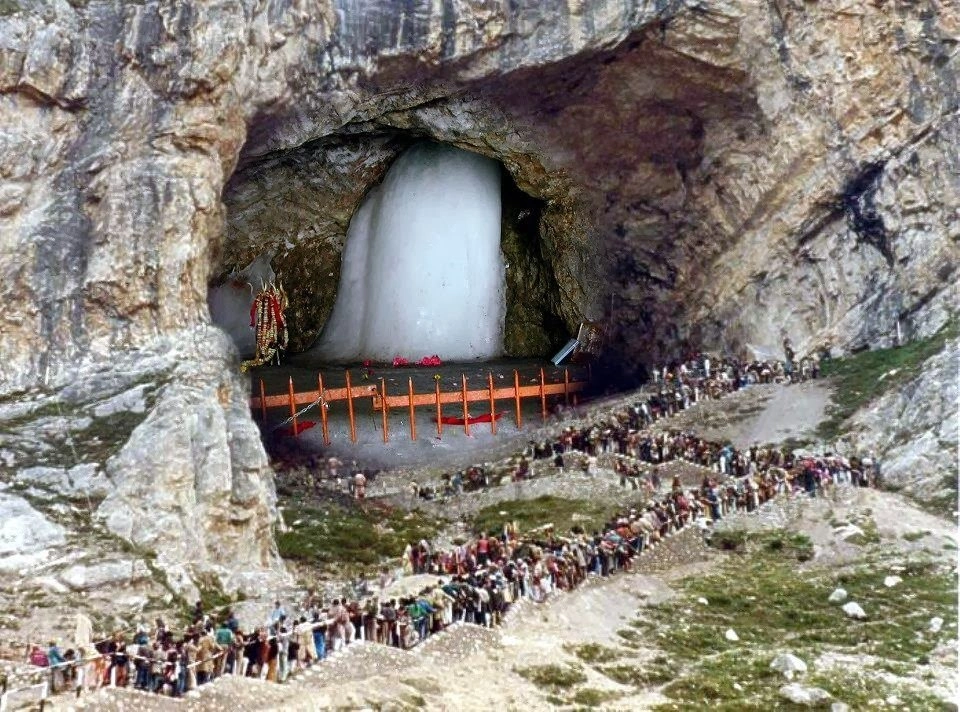
Amarnath is a seasonal high-altitude pilgrimage to the ice Shiva Lingam cave in the Kashmir Himalayas. It is managed by the Shri Amarnathji Shrine Board (SASB). You cannot treat it like a walk-in trek: every pilgrim needs a yatra permit for a fixed date and route, a Compulsory Health Certificate, and an RFID card collected in Jammu and Kashmir before starting.
This guide is for practical planning in 2026: dates, registration, RFID, Baltal vs Pahalgam, helicopter options, how to reach base camps, packing, and a simple checklist. Always re-check live notices on jksasb.nic.in before you travel. Weather and route closures change fast.
Mid-season note (check before you leave): after heavy rain in July 2026, authorities temporarily closed the Pahalgam axis for repair work while the yatra continued on the Baltal axis. Do not assume your registered Pahalgam date still means that track is open. Confirm the current axis status on the SASB homepage and local administration updates the week you travel.
Amarnath Yatra 2026 dates
| Item | Detail |
|---|---|
| Yatra start | 3 July 2026 |
| Yatra end | 28 August 2026 (Shravan Purnima / Raksha Bandhan window) |
| Advance registration opened | 15 April 2026 |
| Official portal | jksasb.nic.in |
Registration for a specific travel date usually closes 7 days before that date. Arrive only for the date printed on your permit. Early arrival does not let you cross the gate sooner.
Registration, CHC, and RFID
Three separate steps. Missing any one stops you at the control gate.
1. Compulsory Health Certificate (CHC)
- Mandatory for every pilgrim
- Must be on the SASB format from an authorised doctor / medical institution (state-wise lists on the SASB site)
- For 2026, CHCs issued on or after 8 April 2026 are the ones accepted for registration
- If your health changes after the CHC, consult a doctor again before you travel
2. Yatra permit
Register online via SASB / the official app, or at designated bank branches across India (first-come, fixed daily quota per route). Bank registration uses Aadhaar-based biometric eKYC where available.
- Age: 13 to 70 years only (even with a CHC, outside this band you are not registered)
- Women more than 6 weeks pregnant are not permitted
- Bank guidelines for 2026 list a permit fee of Rs 150 per yatra permit (doctor fee for CHC is separate)
- The permit shows BALTAL or PAHALGAM and the date you may cross the access control gate:
- Baltal axis: Domel
- Pahalgam axis: Chandanwari
Use only SASB lists for banks and authorised doctors. Do not pay private agents for "special registration."
3. RFID card (mandatory)
A registered permit alone is not enough to start the hill climb.
- Collect your RFID card from designated locations in Jammu / Kashmir division before embarking
- Carry Aadhaar details for collection
- Wear the RFID tag on your neck during the yatra
- No RFID = no start at the control gate
J&K Police has also promoted the Pehchaan app for SANJY 2026 safety tracking. Follow current Board / police instructions when you collect RFID.
Baltal route vs Pahalgam route
| Baltal | Pahalgam | |
|---|---|---|
| Distance (one way, typical) | about 14 km | about 46-48 km |
| Difficulty | Shorter, steeper | Longer, more gradual |
| Time | Often treated as a long day trek (pace varies) | Usually 3-5 days with camp stops |
| Key places | Baltal / Domel access | Chandanwari, Sheshnag, Panjtarni |
| Best for | Limited time, if fit for steep climbs | Traditional multi-day trek, if the axis is open |
Ponies, palkis, and porters are available on notified rates. Prefer pre-paid / Board-notified rates published for 2026 on jksasb.nic.in rather than roadside bargaining alone.
Do not stay overnight at the Holy Cave. SASB advisory: high altitude and harsh weather make overnight stay at the cave unsafe / not permitted.
Free langar food is usually available along the organised yatra area when camps are running.
Helicopter
Helicopter tickets are booked only through the official SASB portal (see Helicopter Service on jksasb.nic.in).
Common routes listed by SASB:
- Neelgrath ↔ Panjtarni (Baltal side)
- Pahalgam ↔ Panjtarni
- Srinagar ↔ Neelgrath
From Panjtarni you still need time on foot / local options to reach the cave and return. SASB heli instructions note a practical gap between onward and return slots (often several hours) because the Panjtarni-cave stretch takes substantial time.
Also required for heli pilgrims: original photo ID + valid CHC + yatra formalities as per current rules. Flights are weather-dependent and can be cancelled with short notice. Soft-check live fare and slot status on the portal; do not buy "heli tickets" from random agents.
How to reach the base camps
| Mode | Notes |
|---|---|
| Flight | Srinagar airport is the usual air gateway; then road toward Baltal or Pahalgam |
| Train | Jammu (Jammu Tawi area) is the main railhead for many groups, then long road north |
| Road | During yatra season, buses, taxis, and organised convoys run on designated patterns; check highway and convoy advisories |
Many groups rest and finish RFID formalities around Jammu or Srinagar before moving to Baltal / Nunwan / Pahalgam camps. Do not schedule a same-day arrival into the valley plus a full steep Baltal climb if the group includes less-fit pilgrims.
SIM tip (SASB advisory): prepaid SIMs from other states often do not work in J&K / the yatra area. Buy a local pre-activated SIM at notified base-camp / Jammu points if needed.
Packing and altitude
The cave area is roughly 3,888 m. Weather can drop sharply (SASB warns temperatures can fall abruptly, including below about 5°C). Hypothermia and altitude illness are real risks.
Carry:
- Warm woollen layers and waterproof shell / poncho
- Trekking shoes with grip (no slippers)
- Printed + phone copies of permit, CHC, ID; RFID once issued
- Personal medicines, basic first aid; discuss altitude medicine with a doctor before the trip
- Dry snacks, water bottle, trekking pole
- Enough cash (limited banking beyond base camps)
- Emergency contact note for someone travelling the same date
SASB health advisory: start fitness walks weeks ahead, go slow on climbs, drink fluids, descend if altitude symptoms worsen. Do not ignore headache, nausea, unusual fatigue, or confusion.
Helplines listed on SASB advisory pages include Jammu 0191-2503399 / 0191-2555662, Srinagar 0194-2313146 / 0194-2313147-49, and toll-free numbers on the site. Prefer numbers printed on the current SASB page if any change.
Checklist
- Confirm yatra is open on your date; check Baltal vs Pahalgam live status
- CHC from authorised doctor (correct 2026 format / date rules)
- Yatra permit for your route and date (jksasb.nic.in)
- RFID collected in J&K before starting
- Warm + waterproof gear and trekking shoes
- Local SIM plan if needed
- Buffer days for weather / highway / route closures
- Helicopter only if booked on the official portal (optional)
FAQ
What are the official 2026 dates?
3 July 2026 to 28 August 2026, as announced by SASB. Always re-check the homepage for suspensions or axis closures.
Is registration free?
No. Bank advance-registration guidelines for 2026 specify Rs 150 per yatra permit. The CHC medical exam is separate. Registration itself is through SASB / designated banks, not private agents.
What is the age limit?
13 to 70 years. Pregnant women beyond 6 weeks are not permitted.
Can I start without RFID if I have a permit?
No. SASB states no registered yatri shall embark without an RFID card collected from designated Jammu / Kashmir locations.
Which route should I choose?
If both axes are open: Baltal is shorter but steeper; Pahalgam is longer and usually more gradual. In mid-2026, Pahalgam was temporarily closed for repairs while Baltal stayed open. Choose based on current official status and your fitness, not only what the permit label says historically.
Is helicopter available from Srinagar?
SASB lists a Srinagar-Neelgrath-Srinagar service in addition to Neelgrath / Pahalgam to Panjtarni. Book only on the official portal and confirm live operations for your dates.
Official site: jksasb.nic.in · Online services / heli booking: linked from the same portal · Advisory and Do's & Don'ts: on the SASB site